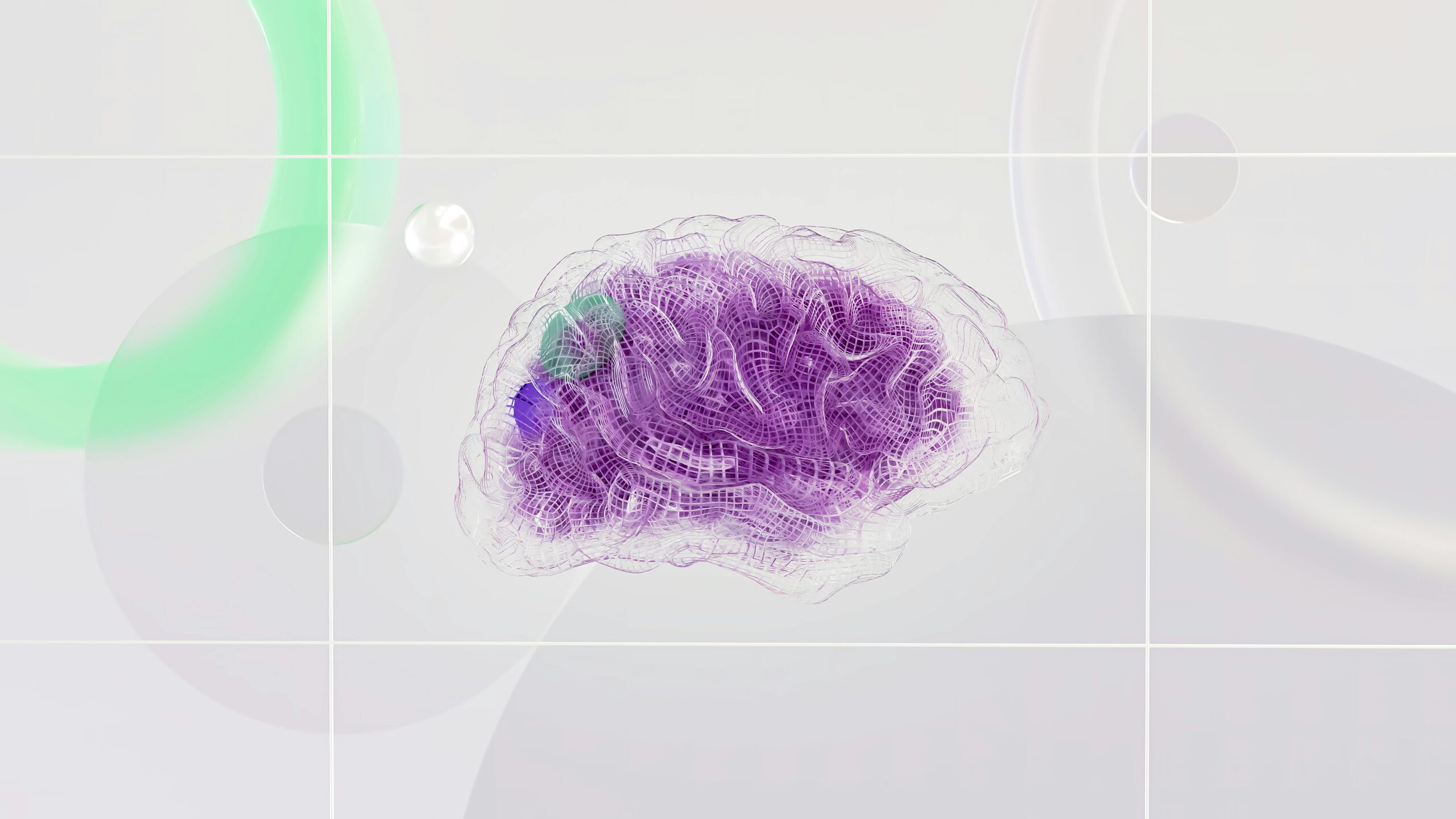
Knowledge graphs are revolutionizing how organizations structure, connect, and derive insights from complex data ecosystems in the modern digital landscape.

🔍 The Foundation of Knowledge Graphs in Modern Data Architecture
In an era where data has become the most valuable asset for organizations worldwide, the ability to understand and leverage information effectively has never been more critical. Knowledge graphs represent a paradigm shift in how we conceptualize data relationships, moving beyond traditional relational databases and flat file structures toward interconnected networks of meaningful information.
At its core, a knowledge graph is a sophisticated semantic model that represents real-world entities and their relationships in a structured, machine-readable format. Unlike conventional databases that store information in rigid tables and columns, knowledge graphs create flexible networks where entities become nodes and relationships become edges, forming an intuitive web of connected information.
This approach mirrors human cognitive patterns more closely than traditional data structures. When we think about concepts, we naturally connect them through associations and relationships. Knowledge graphs replicate this mental framework, enabling machines to process information in ways that align with human reasoning and understanding.
📊 Semantic Models: The Architectural Blueprint
Semantic models serve as the architectural foundation upon which knowledge graphs are built. These models define the vocabulary, concepts, and relationships that govern how information is structured and interconnected within the graph. Think of semantic models as the grammar and syntax of a language that machines use to interpret meaning from data.
The power of semantic models lies in their ability to capture context and meaning beyond simple data values. When you store “Apple” in a traditional database, it’s just a text string. In a semantic model within a knowledge graph, “Apple” becomes a rich entity with multiple dimensions: it could be a fruit, a technology company, or a record label, each with distinct properties and relationships.
This semantic richness enables systems to perform intelligent disambiguation, understanding which “Apple” is relevant based on surrounding context and relationships. Such capabilities are fundamental to advanced applications like natural language processing, recommendation engines, and intelligent search systems.
Components of Robust Semantic Models
Effective semantic models incorporate several essential components that work together to create meaningful knowledge representations:
- Ontologies: Define the types of entities that exist within a domain and their hierarchical relationships
- Taxonomies: Organize entities into categorical structures that reflect their classifications
- Properties: Describe attributes and characteristics of entities
- Relationships: Establish connections between entities with specific semantic meanings
- Rules and Constraints: Define logical conditions that govern valid connections and inferences
🚀 Unlocking Enhanced Data Understanding Through Graph Technology
The transformation from traditional data storage to knowledge graphs unlocks unprecedented capabilities for data understanding and utilization. Organizations implementing knowledge graphs report significant improvements in data discovery, insight generation, and decision-making processes.
One of the most compelling advantages is the ability to perform complex queries that traverse multiple relationship layers effortlessly. Finding connections between seemingly unrelated entities becomes straightforward when data is structured as an interconnected graph rather than isolated tables requiring complex joins.
Consider a healthcare scenario where a knowledge graph connects patients, symptoms, diagnoses, treatments, medications, and research studies. A physician could quickly identify patterns across thousands of patient cases, discover emerging treatment correlations, and receive evidence-based recommendations—all powered by the semantic relationships encoded in the graph.
Real-World Applications Transforming Industries
Knowledge graphs have moved beyond theoretical frameworks to become practical tools driving innovation across diverse sectors. Financial institutions use them to detect fraud patterns by analyzing relationship networks between accounts, transactions, and entities. E-commerce platforms leverage knowledge graphs to power sophisticated recommendation engines that understand product relationships, customer preferences, and contextual relevance.
In the pharmaceutical industry, knowledge graphs accelerate drug discovery by connecting molecular structures, biological pathways, disease mechanisms, and clinical trial data. Researchers can identify potential drug candidates and predict interactions by exploring the semantic relationships embedded within these comprehensive networks.
Media and entertainment companies employ knowledge graphs to organize vast content libraries, enabling personalized content discovery and improving user engagement through context-aware recommendations that understand nuanced relationships between genres, themes, actors, and viewer preferences.
🛠️ Building Knowledge Graphs: Technical Considerations
Constructing effective knowledge graphs requires careful planning and technical expertise. The process involves several critical phases, each demanding attention to detail and alignment with organizational objectives.
The initial phase focuses on domain modeling, where subject matter experts collaborate with data architects to define the entities, relationships, and rules that will govern the graph. This foundational work determines the graph’s utility and scalability, making it crucial to invest adequate time in thoughtful design.
Data ingestion presents unique challenges, particularly when integrating information from heterogeneous sources. Knowledge graphs excel at unifying disparate data, but this requires robust entity resolution mechanisms that can identify when different data sources reference the same real-world entity despite variations in naming, formatting, or representation.
Technology Stack and Implementation Approaches
Organizations have several technological options when implementing knowledge graphs, each with distinct advantages and trade-offs:
| Technology | Strengths | Best Use Cases |
|---|---|---|
| RDF Triple Stores | Standards-based, semantic web compatibility | Academic research, linked open data projects |
| Property Graphs | Flexible schema, high performance | Social networks, recommendation systems |
| Hybrid Solutions | Combined semantic and performance benefits | Enterprise knowledge management |
Popular graph databases like Neo4j, Amazon Neptune, and Apache Jena provide robust platforms for storing and querying knowledge graphs at scale. The choice depends on specific requirements including query patterns, data volume, semantic complexity, and integration needs.
💡 Semantic Reasoning and Inference Capabilities
Beyond storage and retrieval, knowledge graphs enable sophisticated reasoning capabilities that derive new knowledge from existing relationships. This semantic inference transforms knowledge graphs from passive data repositories into active intelligence systems.
Reasoning engines can apply logical rules to discover implicit relationships not explicitly stated in the data. For example, if the graph knows that “John is the father of Mary” and “Mary is the mother of Sarah,” reasoning systems can infer that “John is the grandfather of Sarah” without this relationship being directly encoded.
These inference capabilities become exponentially powerful as graph complexity increases. Organizations leverage semantic reasoning for compliance monitoring, risk assessment, and opportunity identification by automatically discovering patterns and relationships that would be nearly impossible to detect through manual analysis.
Machine Learning Integration and AI Synergies
The convergence of knowledge graphs with machine learning represents one of the most exciting frontiers in artificial intelligence. Knowledge graphs provide structured context that enhances machine learning models, while ML algorithms can help automatically construct and refine graphs from unstructured data.
Graph neural networks (GNNs) have emerged as powerful techniques for learning representations directly from graph structures, enabling applications like node classification, link prediction, and graph-level pattern recognition. These approaches combine the semantic richness of knowledge graphs with the learning capabilities of neural networks.
Natural language processing benefits tremendously from knowledge graph integration. Understanding textual content becomes more accurate when models can reference structured knowledge about entities, their properties, and relationships. This synergy powers advanced applications like question answering systems, semantic search engines, and conversational AI assistants.
🎯 Strategies for Maximizing Knowledge Graph Value
Successfully leveraging knowledge graphs requires more than technical implementation—it demands strategic thinking about how semantic models align with business objectives and user needs. Organizations that extract maximum value follow several best practices.
Start with focused use cases rather than attempting to model an entire enterprise domain immediately. Pilot projects in specific areas allow teams to develop expertise, demonstrate value, and iterate on design principles before scaling. Success in targeted applications builds organizational confidence and support for broader initiatives.
Prioritize data quality and governance from the outset. Knowledge graphs amplify both good and bad data—errors and inconsistencies propagate through relationships, potentially undermining trust in the system. Establish clear ownership, validation processes, and maintenance protocols to ensure the graph remains a reliable information asset.
Fostering Adoption and User Engagement
Technical excellence alone doesn’t guarantee success. User adoption determines whether knowledge graphs deliver practical value or become unused infrastructure. Design interfaces and query mechanisms that match user sophistication levels, providing both powerful capabilities for experts and intuitive access for casual users.
Documentation and training are essential investments. Help users understand the semantic model, available relationships, and query patterns that unlock insights. Creating a community of practice where users share discoveries and techniques accelerates learning and reveals unexpected use cases.
Continuous evolution is inherent to successful knowledge graphs. As organizational understanding deepens and new data sources become available, the semantic model should adapt. Establish processes for proposing, reviewing, and implementing schema changes that balance stability with flexibility.
🌐 The Future Landscape of Knowledge Graphs and Semantic Technologies
The trajectory of knowledge graph development points toward increasingly sophisticated, interconnected, and intelligent systems. Several emerging trends are shaping the future of semantic technologies and their applications.
Federated knowledge graphs enable organizations to query across multiple independent graphs without centralization, preserving data sovereignty while enabling comprehensive analysis. This architecture supports collaborative intelligence across organizational boundaries, facilitating partnerships and ecosystem approaches to knowledge sharing.
Temporal knowledge graphs add time dimensions to relationships, capturing how connections evolve and enabling historical analysis and predictive modeling. Understanding that relationships are not static but change over time opens new analytical possibilities for trend identification and scenario planning.
The integration of knowledge graphs with blockchain technologies promises enhanced provenance tracking and trust verification. Immutable records of data lineage combined with semantic relationships create auditable knowledge systems particularly valuable in regulated industries and supply chain applications.
🔐 Addressing Privacy and Ethical Considerations
As knowledge graphs grow in sophistication and scope, privacy and ethical implications demand careful attention. The power to discover non-obvious relationships raises legitimate concerns about surveillance, discrimination, and misuse of personal information.
Organizations must implement privacy-preserving techniques such as differential privacy, federated learning, and purpose-based access controls. Knowledge graphs should respect data sovereignty principles, ensuring individuals and organizations maintain appropriate control over information about themselves.
Transparency about what relationships are captured, how inferences are derived, and who has access to what information builds trust and supports ethical knowledge graph deployment. Regular audits should assess whether graph usage aligns with stated principles and regulatory requirements.

✨ Transforming Data into Actionable Intelligence
Knowledge graphs represent more than a technological advancement—they embody a fundamental shift in how organizations conceptualize and leverage information assets. By encoding semantic relationships and enabling contextual understanding, these powerful structures transform raw data into actionable intelligence.
The journey toward mature knowledge graph implementation requires sustained commitment, cross-functional collaboration, and willingness to evolve practices as understanding deepens. Organizations that embrace this journey position themselves to compete effectively in increasingly data-driven markets where insight velocity and decision quality provide decisive advantages.
As semantic technologies continue maturing and integration patterns become established, knowledge graphs will transition from competitive differentiators to essential infrastructure. The question is no longer whether to adopt knowledge graphs, but how quickly organizations can develop the capabilities to leverage them effectively.
The power of knowledge graphs lies not in replacing existing data systems but in complementing them with a semantic layer that unlocks latent value through connection, context, and intelligent reasoning. Organizations that master this approach gain unprecedented ability to understand their data, their operations, and their opportunities in ways that drive meaningful innovation and sustainable competitive advantage.